
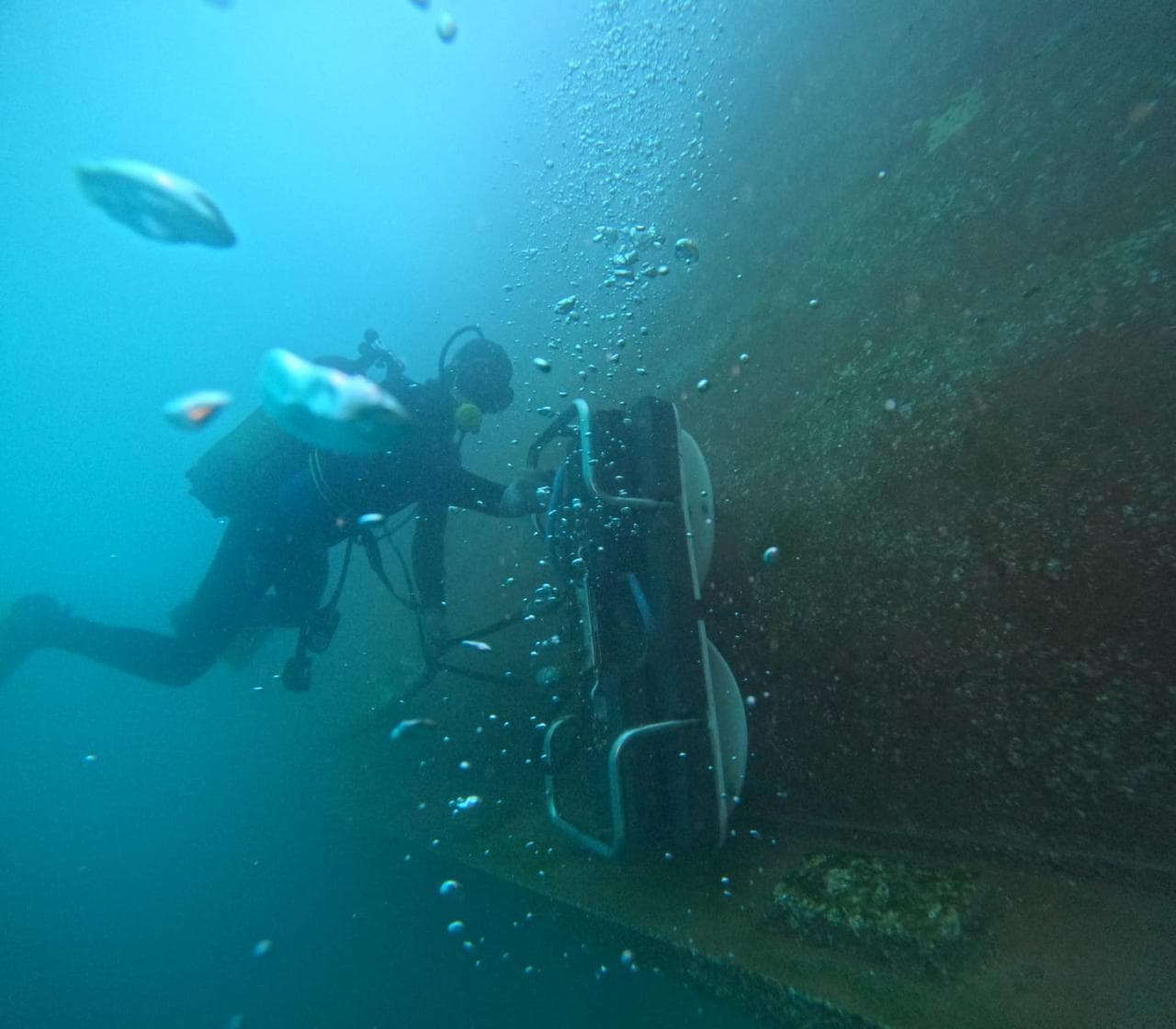
Underwater Hull Cleaning in Suez and Egyptian Ports
Professional underwater hull cleaning service in Suez and Egyptian ports, with the method set by coating type, fouling rating, site conditions and port permission
Suez-based team 18+ years' experience Response within 24 hours
Almancy mobilises commercial diving teams from Port Tawfiq for underwater hull cleaning in Suez, the Suez Canal corridor and ports across Egypt, subject to site conditions and permission from the relevant authority. The enquiry usually arrives as a booking request: vessel, berth, date, send divers. The useful conversation starts one step earlier, with three questions: how much growth is actually on the hull, what coating is under it, and whether the port will permit cleaning in the water at that berth. Answer those and the method, the price and the risk all fall out. Get them wrong and a cheap clean can strip service life out of a coating worth far more than the fouling ever cost you.
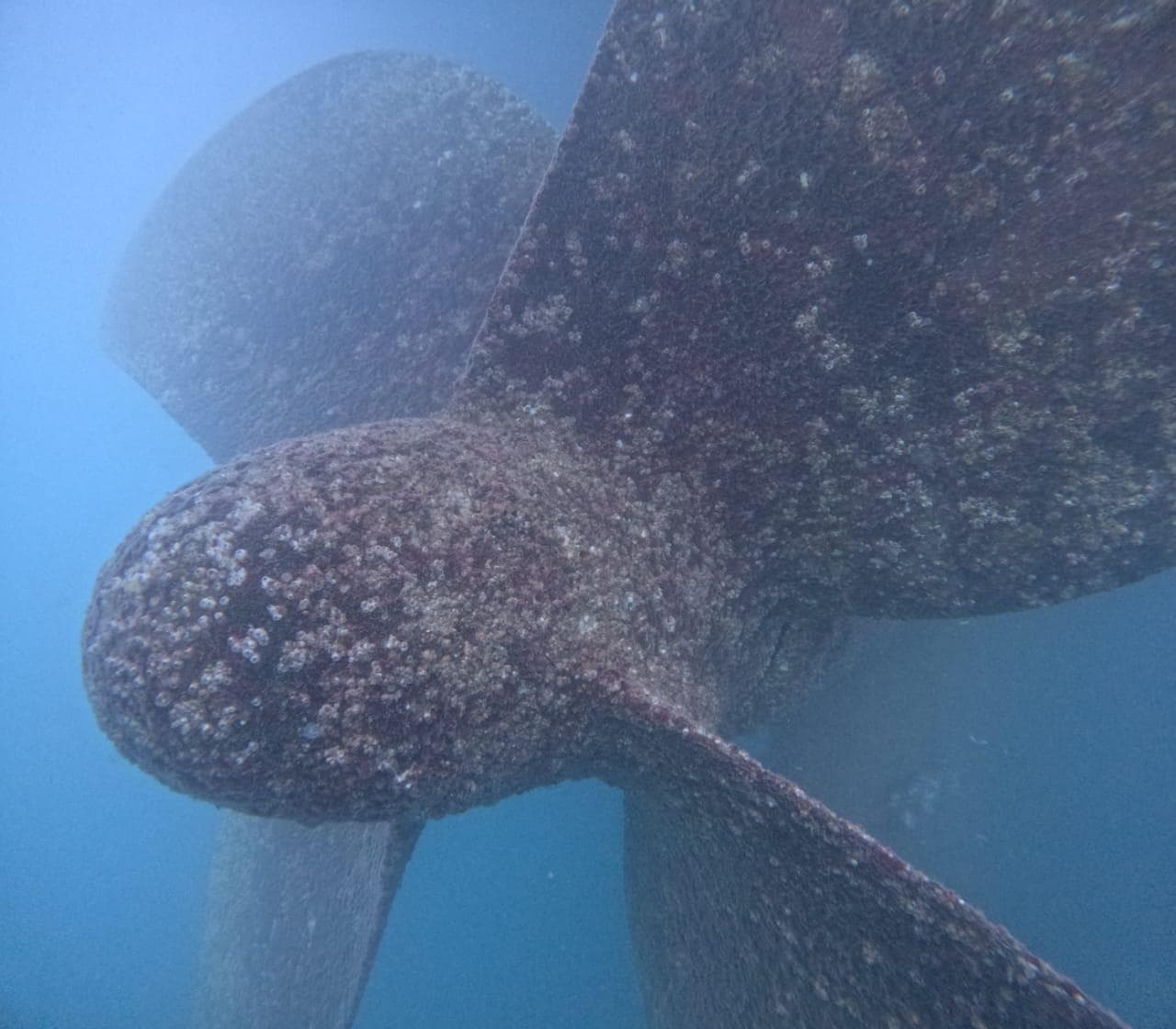
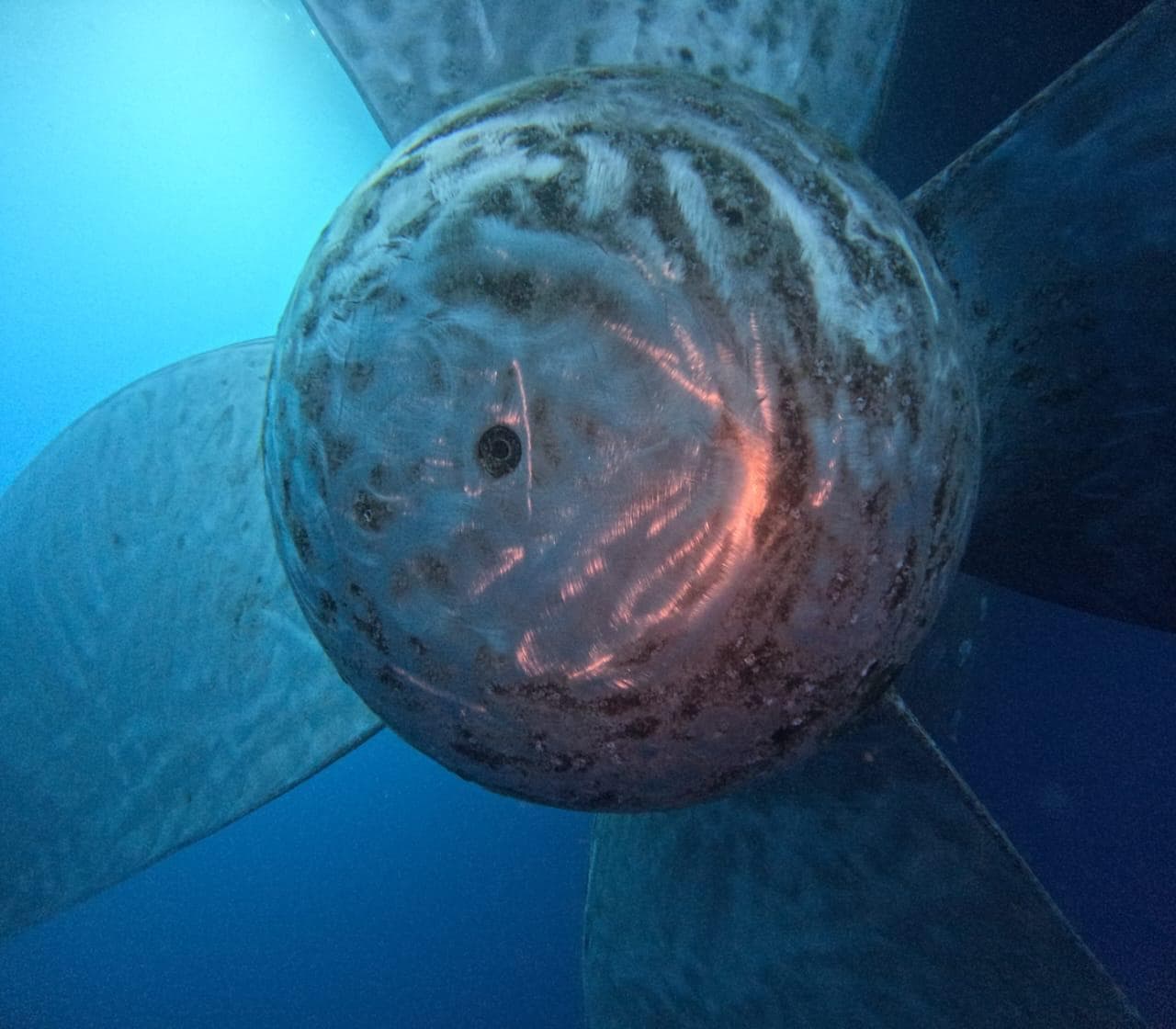
Review the documented Underwater Hull and Propeller Cleaning: Before and After for matched visual evidence from the pictured components and the limits of what the images establish.
Should this hull be cleaned in the water at all
The 2023 IMO Biofouling Guidelines (resolution MEPC.378(80), which revoked the 2011 version) set a rating scale that is the most practical starting point a superintendent has. Rating 1 is microfouling only, the slime layer, with paint still visible beneath it. Rating 2 is light macrofouling over 1 to 15 per cent of the area, growth that cannot be wiped off by hand. Rating 3 is 16 to 40 per cent. Rating 4 is 41 to 100 per cent.
Each band carries a different action. At rating 1, proactive cleaning may be appropriate. From rating 2 upward, cleaning with capture is the recommended route and the interval to the next inspection should shorten. The guidelines then add a line contractors rarely quote back to owners: where the anti-fouling system is significantly deteriorated, what is recommended is drydocking with reapplication of the coating, not another clean.
So the answer is sometimes no. A hull at rating 4 over a coating at the end of its service life is a docking job. Cleaning it afloat will remove the growth, take coating with it, and leave a rougher surface that fouls again faster.
Soft fouling and hard fouling are not the same job
Microfouling is slime and early weed. It sits lightly, it comes away with soft tools or gentle brushing, and removing it early is the whole logic behind cleaning little and often.
Macrofouling is barnacles, tubeworms, mussels, bryozoans and heavy algal fronds, bonded to the coating. Removing it means applying enough force to break that bond, and whatever breaks the bond also acts on the paint film underneath. That is where coating damage happens. Barnacles do not always come away whole either: capture trials have found base plates left on the surface after the shell is gone, ready substrate for the next generation.
Regulators draw their lines on exactly this distinction. Washington State's guidance describes allowing in-water cleaning of hulls carrying only slime and sea grass, while not allowing it for hulls carrying juvenile or adult barnacles, mussels and tubeworms. If your hull has visible shell growth, expect every conversation about it to be harder.
The coating decides the method
Anti-fouling systems fall into families that tolerate very different treatment, and the difference is physical rather than a matter of opinion.
IMO's 2025 guidance on in-water cleaning (MEPC.1/Circ.918) turns this into a documented question rather than an operator's judgement. Before work starts, the service provider is expected to hold the coating manufacturer's information showing the method suits that coating, evidence the cleaning system has been tested on that coating type, and a pre-cleaning inspection of the actual film. The same guidance defines coating damage bluntly: peeling, blistering, flaking, delamination, brush marks and swirls, scrapes, scratches, exposed metal, polish-through.
We fix the method in the job-specific method statement once the paint record and the pre-cleaning inspection are in front of us. That is why we ask for the paint record before we ask for the ETA.
- Self-polishing copolymer and other biocidal coatings work by controlled release. Brushing lifts surface deposits and light fouling and can refresh the active surface, but abrasive brushes exacerbate the release of coating material and cut into the film you paid for.
- Foul-release coatings, the silicones and fluoropolymers, work by low adhesion instead of biocide. Australian and New Zealand guidance is explicit that brush systems can damage them and are not recommended unless the brushes are soft enough to leave the coating intact, while soft tools such as cloths and squeegees will remove both micro and macrofouling from these surfaces without harming coating integrity. A shell fragment trapped under a cloth will scratch, so the method has to control for that.
- Hard, mechanically resistant coatings (epoxy, epoxy glass, ceramic epoxy) carry no anti-fouling action at all. They foul, and they are built to be cleaned repeatedly, including by more abrasive methods.
- Controlled water-jetting cuts across all of these. Pressure and pattern can be varied to suit the coating and the fouling, but pressure has to stay below what harms the film, and jetting on its own does not contain what it removes.
Hull cleaning in Suez: permission is a per-port question
There is no single global rule. In-water cleaning is permitted, restricted or refused by the State and port where the vessel is lying, and those rules have tightened almost everywhere over the last decade.
The IMO guidelines say reactive cleaning should be performed in an area accepted by the relevant authority, and that proactive cleaning without capture should not be carried out on fouling rated 2 or above. Where a jurisdiction assesses requests case by case, MEPC.1/Circ.918 sets out what it will want to see: the Biofouling Management Plan and Record Book, the anti-fouling certificate, coating type and remaining service life, fouling rating and coverage, whether the growth was accumulated in the same waters, the cleaning system to be used, and the arrangements for storing and disposing of captured material. A standard request form is annexed to it.
The specifics vary sharply. Capture thresholds proposed or applied by different bodies run from filtration of particles above 10 micrometres, through 15 micrometres, to Dutch requirements in the region of 0.5 to 1 micrometre. Australia has required biofouling management reporting from every international arrival since 15 June 2022. New Zealand sets a clean-hull threshold before arrival and allows more growth on short-stay vessels calling only at approved ports. California restricts in-water hull cleaning to best available technology and does not allow it on biocidal coatings in waters already impaired for those metals.
The Suez Canal Authority's maritime salvage and underwater works page lists underwater fouling removal, propeller cleaning and sea-chest work among its canal-zone functions; that page is not a substitute for confirming permission for a specific berth. For a job in Egypt we publish no claim about what a given port or the canal authority will allow, because that is the authority's decision and it moves. Tell us the berth and the date, we will tell you what the cleaning plan has to show, and permission is confirmed through the vessel's agent before anyone mobilises.
Warm water, current, and what the ship has to do
The Gulf of Suez and the Red Sea are high fouling-pressure waters. Summer surface temperatures in the northern Red Sea sit in the low thirties Celsius, with higher values recorded in sheltered lagoons, and salinity is high. Warm water accelerates settlement, so an idle period here builds macrofouling faster than the same period in a temperate port. A vessel sitting for weeks on a convoy slot in July is not in the condition its coating was specified for.
The site sets the rest of the constraints. Visibility governs whether a proper pre-cleaning inspection can be recorded at all, and the IMO guidance is clear that cleaning should not proceed without an adequate one, with rescheduling or moving to a better location as the stated alternatives. Current at canal anchorages, under-keel clearance over the tide, quay clearance and fenders alongside, and traffic movements around the berth all shape the sequence. Silt and reduced visibility weigh more heavily at Alexandria than at Suez.
The ship's side of the job is not optional. Propulsion and thrusters are immobilised and tagged out, with the diver or supervisor witnessing the lock and tag before anyone enters the water. Sea suctions in the working area are shut down or their status formally agreed, ballasting and bunkering are deconflicted, and impressed-current cathodic protection is powered off while divers are on the hull. Before any lockout is released, three things get confirmed: every grating restored, every person out of the water, all equipment recovered. Sea-chest work internals are a separate scope with their own isolation and permit regime, and propeller and running gear polishing is quoted alongside but finished to different standards.
For a wider vessel condition record, see hull inspection and the broader underwater inspection service; class-attended eligibility is covered in the in-water survey and class requirements guide.
How the work is carried out
- 1
Information exchange and permission
You send the coating record, the last inspection or docking report, the idle history and the intended berth or anchorage. We tell you what the cleaning plan must show, and permission is confirmed with the authority through the vessel's agent before mobilisation.
- 2
Pre-cleaning inspection
Divers record photographs and video of the areas in scope with adequate lighting and a size reference, so fouling rating and coating condition are documented before anything is touched.
- 3
Method statement and cleaning plan
The method is fixed against coating type, coating condition and fouling rating. The plan names the areas to be cleaned, the areas to be avoided and the reason for avoiding each, plus the triggers for stopping work.
- 4
Isolation and pre-dive checks
Propulsion is immobilised, cathodic protection powered off, sea suctions and simultaneous operations deconflicted, and the lockout witnessed. Communications between dive supervisor, bridge and engine room are tested.
- 5
Cleaning under live monitoring
Work follows the planned route on live video, tracking coverage and watching for coating damage or fouling the inspection did not predict. If either appears, cleaning in that area stops and the plan is revised rather than pushed through.
- 6
Post-cleaning inspection and reinstatement
The cleaned areas are recorded again, gratings confirmed restored, divers and equipment confirmed clear, and the ship released to reinstate machinery. Reporting follows, including anything left uncleaned and why.
What you receive
- Pre-cleaning inspection record: dated photographs and video with fouling rating and coating condition noted area by area
- The agreed cleaning plan, listing areas cleaned, areas deliberately avoided, and the reason for each avoidance
- Post-cleaning inspection record of the same areas, showing the surface condition achieved
- A cleaning report in a format suitable for entry in the vessel's Biofouling Record Book, referencing the supporting images and video
- Disposal documentation for captured material where capture is used and local rules require it
- A short written view on what should be left for the next drydocking, including any coating defect found
What we need to quote
The two things that move a hull cleaning quote most are the coating and the actual fouling, and both are usually knowable before we arrive. Send these and you get an itemised figure instead of a range.
- Vessel particulars, current draught, and which areas are in scope: flat bottom, vertical sides, boot-top, and whether niche areas are included
- Coating record: manufacturer, product type (self-polishing, foul-release, hard coating), date of application, remaining service life, any prior damage, and the manufacturer's cleaning advice
- Dates of the last drydocking, the last cleaning and the last underwater inspection, with the reports if you hold them
- Recent photographs or video of the hull, or the last fouling assessment, plus how long the vessel has been idle and where
- Port, berth or anchorage, whether the vessel is alongside, at anchor or awaiting a canal convoy, and the working window available
- Who is approaching the port authority for permission, and whether capture and waste disposal are required locally
- Whether propeller and running gear are to be quoted with the hull, and whether sea-chest internals are in scope
Related Services
Hull Cleaning: Frequently Asked Questions
Questions we are asked most often about hull cleaning.
Do you provide underwater hull cleaning in Suez?
Will in-water cleaning damage my anti-fouling coating?
Does the port have to give permission before you clean?
Can you remove barnacles in the water?
How long does an in-water hull clean take?
Who pays for cleaning, the owner or the charterer?
How much does hull cleaning cost?
Hull Cleaning Case Studies
Review the documented visual record below. It identifies the pictured components and keeps the evidence limits visible.
Start Your Project
Send us the paint record before you book the divers
The coating type, the last docking date and the berth are enough for a first answer: whether this hull should be cleaned in the water at all, what method the paint will tolerate, and what the port will need to see before it agrees. The priced scope follows once the pre-cleaning inspection has confirmed the fouling. Teams mobilise from Suez and the 24/7 line is answered at any hour.