Underwater Inspection Services in Egypt
Examination of underwater structures using sonar imaging, high-definition cameras, and partner-supported ROV survey
Suez-based team 18+ years' experience Response within 24 hours
Overview
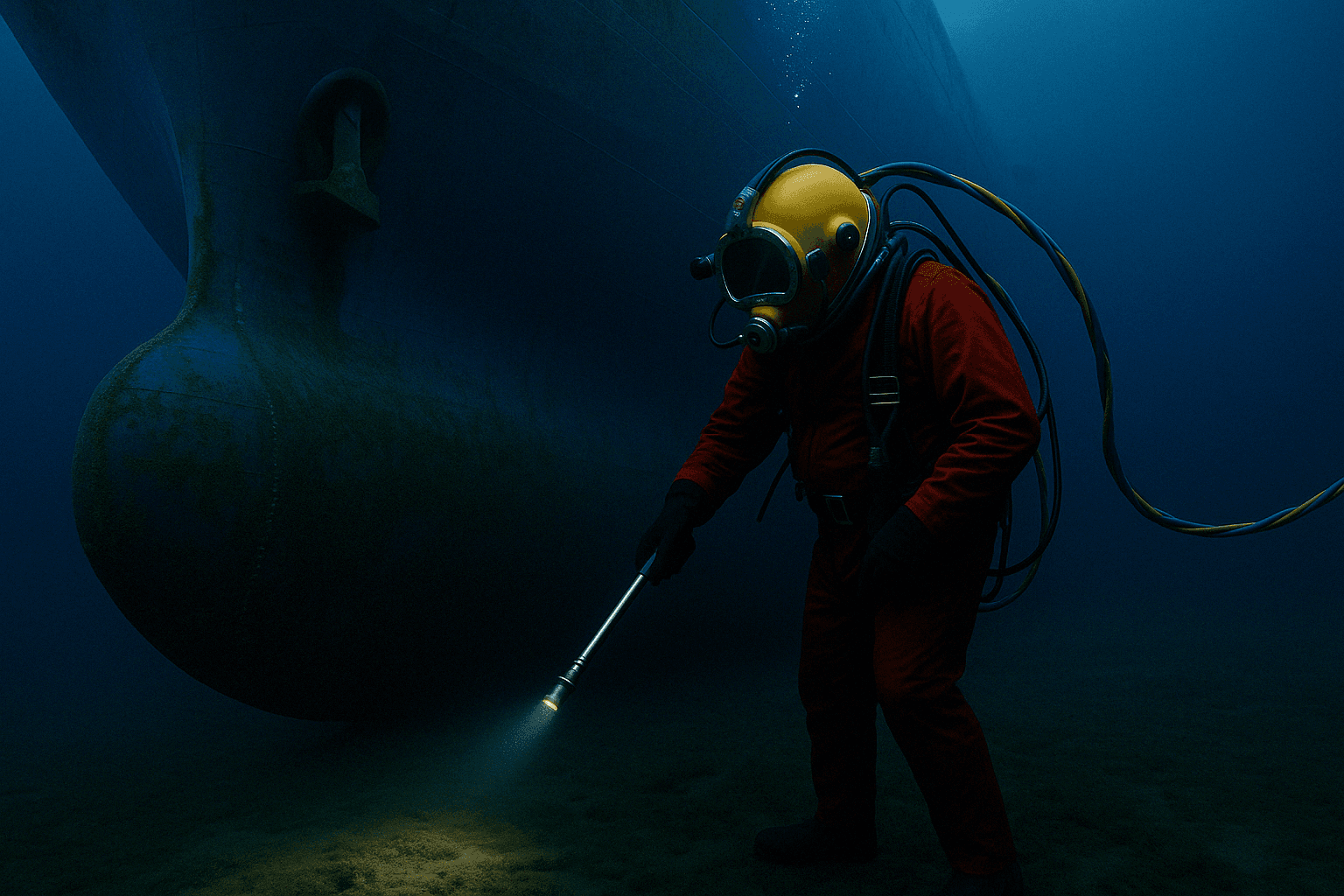
Almancy delivers detailed underwater inspection services for marine structures, vessels, pipelines, and port infrastructure across Egypt, the Suez Canal, and the Red Sea. Our certified commercial divers combine sonar imaging and high-definition cameras with non-destructive testing — including ultrasonic thickness gauging and cathodic protection surveys — to identify corrosion, structural defects, scour, and impact damage before they become costly failures. When a project's depth or scope calls for it, we also bring in ROV (Remotely Operated Vehicle) survey through specialist partners to extend coverage beyond diver-accessible areas. Every inspection is documented with annotated images, video, and a clear report of findings and recommended remediation, helping owners meet class and port-authority requirements and plan maintenance with confidence. Where marine growth prevents a reliable survey, we scope underwater hull cleaning in Suez and Egyptian ports as a separate, permission-dependent attendance. Whether it is a routine class survey, a pre-purchase inspection, or an emergency damage assessment, our team mobilizes quickly across Egyptian ports to keep your assets compliant and operational.
Features
- Visual inspections by certified divers
- ROV survey through specialist partners when required
- Ultrasonic thickness testing
- Cathodic protection surveys
- Detailed reporting with images and video
Benefits
- Early detection of structural issues
- Compliance with regulatory requirements
- Prevention of costly failures
- Extended asset lifespan
- Improved safety
Related Services
Underwater Inspection: Frequently Asked Questions
Questions we are asked most often about underwater inspection.
What is a cathodic protection (CP) survey?
What is ultrasonic thickness (UT) gauging underwater?
What is an in-water survey (IWS) and can it replace drydocking?
How deep can your divers work?
How long does an underwater hull inspection take?
Underwater Inspection Case Studies
See documented examples of underwater inspection work and the scope of each project.
 Salvage
Cedar Queen Tugboat Stranding & Recovery
Emergency salvage operation for the Cedar Queen tugboat that ran aground, requiring precision refloating techniques and damage assessment.
Read case study Salvage
Stranded Supply Vessel Salvage Operation
Recovery of a stranded supply vessel in challenging shallow water conditions, requiring specialized salvage techniques.
Read case study Salvage
Arwi Vessel Recovery at Ras Sedr
Complex salvage operation for the Arwi vessel at Ras Sedr, combining diving expertise with specialized marine recovery equipment.
Read case studyStart Your Project
Need underwater inspection you can rely on?
Tell us about your site and timeline. Our diving team responds fast with a clear scope and a free, no-obligation quote.