Technical Guide
Marine Salvage Methods Explained: Refloating, Wreck Removal & Regulations
Marine salvage is the work of saving a vessel, its cargo, or other property in danger at sea, and of recovering or removing it when it has been stranded, sunk, or wrecked. This guide explains the core salvage methods in plain language, walks through how a sunken ship is refloated step by step, sets out the difference between salvage and wreck removal, and covers the main regulations that govern recovery. It is written for owners, insurers, and operators working in Egypt, the Suez Canal, the Gulf of Suez, and the Red Sea.
Almancy delivers this work across Egypt, the Suez Canal, and the Red Sea.
Request marine salvage supportWhat is marine salvage?
Marine salvage is the act of rescuing a ship, its cargo, or other maritime property from danger, or recovering it after it has run aground, capsized, or sunk. The aim is to preserve value and prevent loss, whether that means freeing a grounded vessel before it breaks up, sealing and refloating a flooded hull, or recovering cargo and equipment from the seabed.
Salvage covers a wide range of situations, from an urgent emergency response to a vessel in immediate danger, to a planned recovery of a wreck that has been lost for some time. The right approach depends on the casualty's condition, the depth and seabed, the weather and tide, and the environmental sensitivity of the site.
Because casualties rarely wait for ideal conditions, salvage is as much about planning, sequencing, and risk control as it is about lifting power. A sound salvage plan protects the crew, the divers, the environment, and the remaining value in the vessel and its cargo.
Salvage vs wreck removal
Salvage and wreck removal are often spoken of together, but they answer two different questions. Salvage is about saving property and preventing loss: the priority is to rescue the vessel, its cargo, or its equipment while there is still value worth preserving, ideally returning the ship to service.
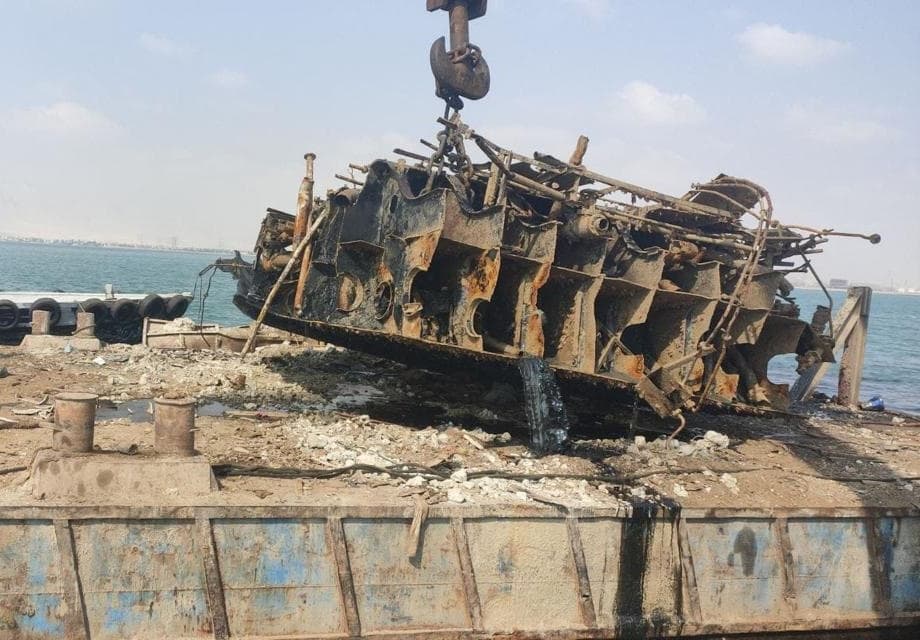
Wreck removal is about eliminating a hazard. When a vessel is beyond economic repair, or when it blocks a fairway, port, or anchorage, the objective shifts from saving it to removing it safely so it no longer threatens navigation, the environment, or other operations. That may mean refloating and towing the wreck away, or cutting and lifting it in sections.
In practice the two overlap. A casualty may begin as a salvage case, with an attempt to refloat and save the ship, and become a wreck-removal case if the hull cannot be recovered intact. The distinction matters because it changes the objective, the legal framework, and who carries the cost.
- Salvage: save property, preserve value, prevent loss, ideally return the vessel to service
- Wreck removal: remove a hazard or obstruction to navigation, safety, or the environment
- A single casualty can move from salvage to wreck removal as conditions and assessments change
Core salvage techniques
There is no single way to recover a casualty. Salvors combine several established techniques to suit the vessel's condition, the water depth, the seabed, and the surrounding environment. Most operations begin with a dive survey and a tailored plan, then apply a mix of the methods below.
The choice is driven by physics and risk. Restoring buoyancy by sealing breaches and removing water is often the gentlest route; controlled lifting and righting are used where buoyancy alone is not enough or where the hull lies on its side.
- Patching and dewatering: seal hull breaches with patches, cofferdams, or cement boxes, then pump out flooded compartments to restore buoyancy
- Refloating: combine patching, dewatering, and ballast management to bring a grounded or sunken hull back afloat
- Parbuckling and righting: rotate a capsized or listing vessel upright using controlled pulling forces, often with anchored winches and counter-flooding
- Controlled lifting: use cranes, sheerlegs, or lift barges to raise a casualty or its sections under managed load
- Pneumatic airbags: install and inflate marine salvage airbags or lift bags to add buoyancy and help raise or move a hull
How a sunken ship is refloated, step by step
Refloating a sunken or grounded ship follows a logical sequence, even though every casualty is different. The goal is to restore enough buoyancy and stability to bring the hull back afloat without causing further damage, pollution, or risk to the team.
Each stage informs the next. The survey shapes the plan, the patching and dewatering restore buoyancy, added lift makes up any shortfall, and stabilisation keeps the recovered hull safe until it can be towed to a place of safety.
- Survey: divers and salvors assess the vessel's condition, list, breaches, flooding, and the seabed, then build a recovery plan
- Seal and patch: close hull breaches with patches, cofferdams, or cement boxes so compartments can be made watertight
- Dewater and manage ballast: pump out flooded spaces and redistribute ballast to recover buoyancy and control the list
- Apply buoyancy or lift: add pneumatic airbags, lift bags, or crane and barge lift where dewatering alone is not enough
- Stabilise and tow: confirm stability and watertight integrity, then tow the refloated vessel to a place of safety for inspection and repair
Wreck removal regulations
Wreck removal sits within an international legal framework. The Nairobi International Convention on the Removal of Wrecks provides a basis for states to require the removal of wrecks that pose a hazard to navigation or the marine environment, and to recover the costs of doing so. It also places the liability for locating, marking, and removing a hazardous wreck on the registered shipowner, backed by a requirement for owners of larger ships to carry insurance or other financial security for wreck removal.
Salvage of property in danger is governed by long-established principles of salvage law, under which a salvor who voluntarily saves a vessel or cargo from peril is entitled to a reward. A widely used contract for this is Lloyd's Open Form (LOF), which operates on a no cure, no pay basis: if the salvage succeeds the salvor earns an award, and if it fails the salvor is generally not paid. The size of the award reflects factors such as the danger involved, the value of the property saved, and the skill and effort of the salvors.
These frameworks are international and apply broadly; the precise obligations in any given case depend on the flag state, the coastal state, the vessel, and the contract in place. Owners and insurers should always confirm the applicable rules and engage qualified legal and salvage advice for a specific casualty.
- Nairobi Convention: a basis for requiring removal of hazardous wrecks and recovering the cost, with liability on the registered owner
- Owner liability and insurance: owners of larger ships must carry financial security for wreck removal
- Lloyd's Open Form (LOF): a standard salvage contract operating on a no cure, no pay basis
- Salvage awards: rewards reflect the danger, the value of property saved, and the salvors' skill and effort
Salvage in the Suez Canal & Red Sea
The Suez Canal is one of the busiest shipping arteries in the world, and a single grounding or breakdown in the channel can halt traffic and cascade delays across global trade. The 2021 grounding of the Ever Given, which blocked the canal for days, is widely cited as industry context for the scale of obstruction-salvage demand in this corridor; it is referenced here only to illustrate that demand, not as work carried out by Almancy.
That concentration of traffic, combined with the Gulf of Suez and the Red Sea's mix of busy ports, offshore activity, and sensitive coral environments, makes fast, well-planned salvage capability essential in the region. Groundings, machinery failures, and weather events can put vessels and the environment at risk with little warning.
Almancy is based at Port Tawfiq on the Suez Canal and provides 24/7 emergency response, mobilising quickly to casualties in the canal corridor, the Gulf of Suez, the Red Sea, the Mediterranean, and Egyptian ports. Diving in these waters is coordinated with the relevant port authority, and operations in the canal zone are carried out under Suez Canal Authority rules.
Almancy salvage case studies
Salvage is Almancy's strongest proven area, with recoveries completed on real Egyptian operations across a range of casualties and conditions. The Cedar Queen tugboat was refloated after running aground, and the Arwi was recovered at Ras Sedr, a remote site with a rocky seabed that demanded careful planning and execution.
Environmental protection is built into how we work. We recovered a yacht stranded on a reef at Sharm El Sheikh using reef-safe techniques, completed with the relevant environmental authority's sign-off, so the coral and coastline were protected throughout the operation.
Each casualty is assessed on its own merits, with a tailored plan, the right combination of techniques, and coordination with the port or canal authority. To discuss a stranded, sunk, or wrecked vessel, contact Almancy for a free quote and 24/7 emergency support.
Frequently Asked Questions
What is the difference between salvage and wreck removal?
How is a sunken ship refloated?
How do salvage airbags work?
What is the Nairobi Convention on wreck removal?
What should you do when a ship runs aground?
Related guides
Talk to our team
Need salvage operations in Egypt or the Suez Canal?
Send us your scope and timeline. Our diving team responds fast with a clear scope and a free, no-obligation quote.